









Asia/Pacific

Europe

North America

South America

Global

Register and repair tools

Keep your tools in excellent shape on myMirka where you can register, manage and order repair for your tools.

Login to myMirka

Mirka partners

Replenish your stock, access marketing materials, view sales guides and read about upcoming product launches.

Login to Partner Portal

Wall and Ceiling Sanding and Preparation

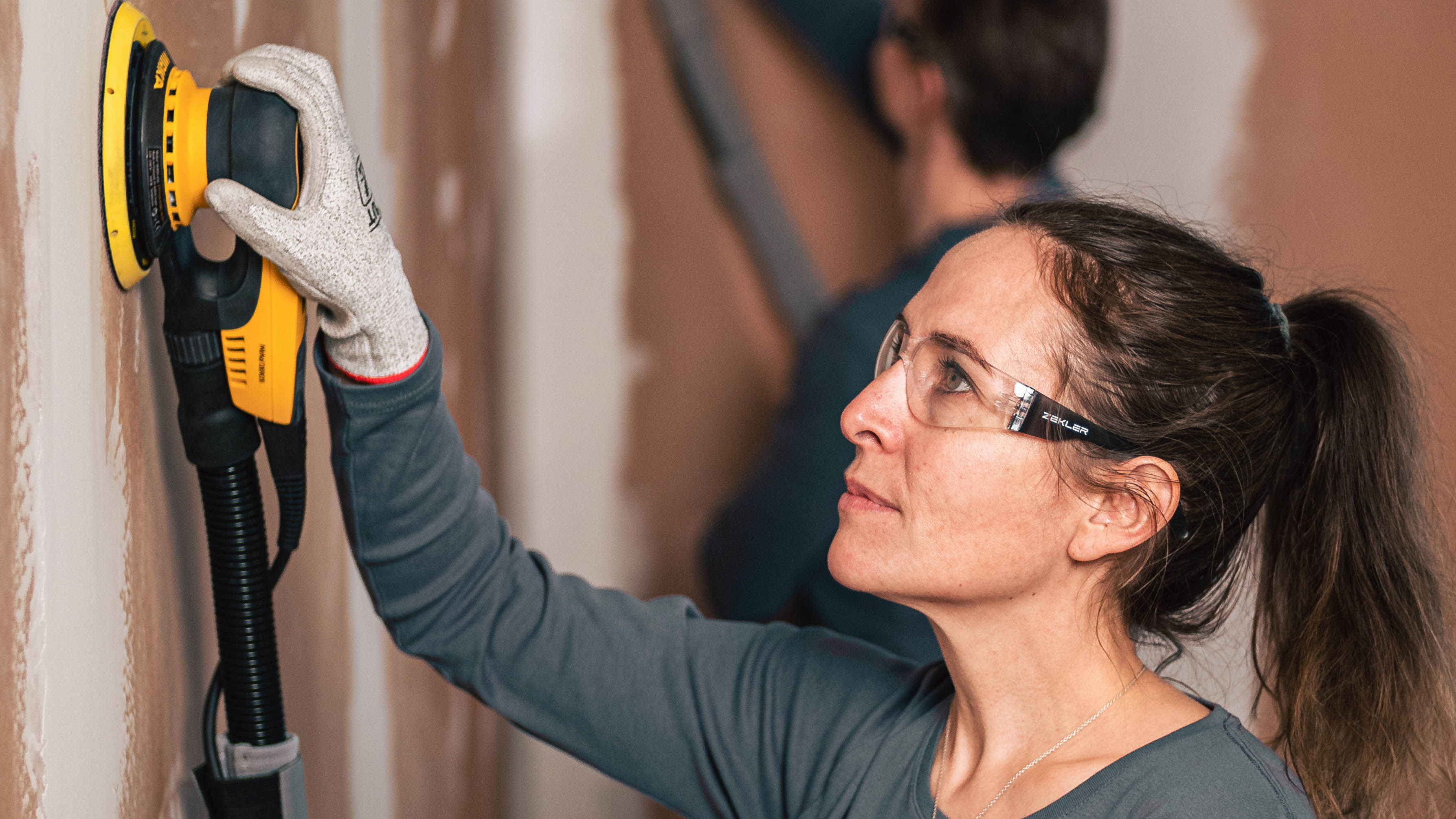
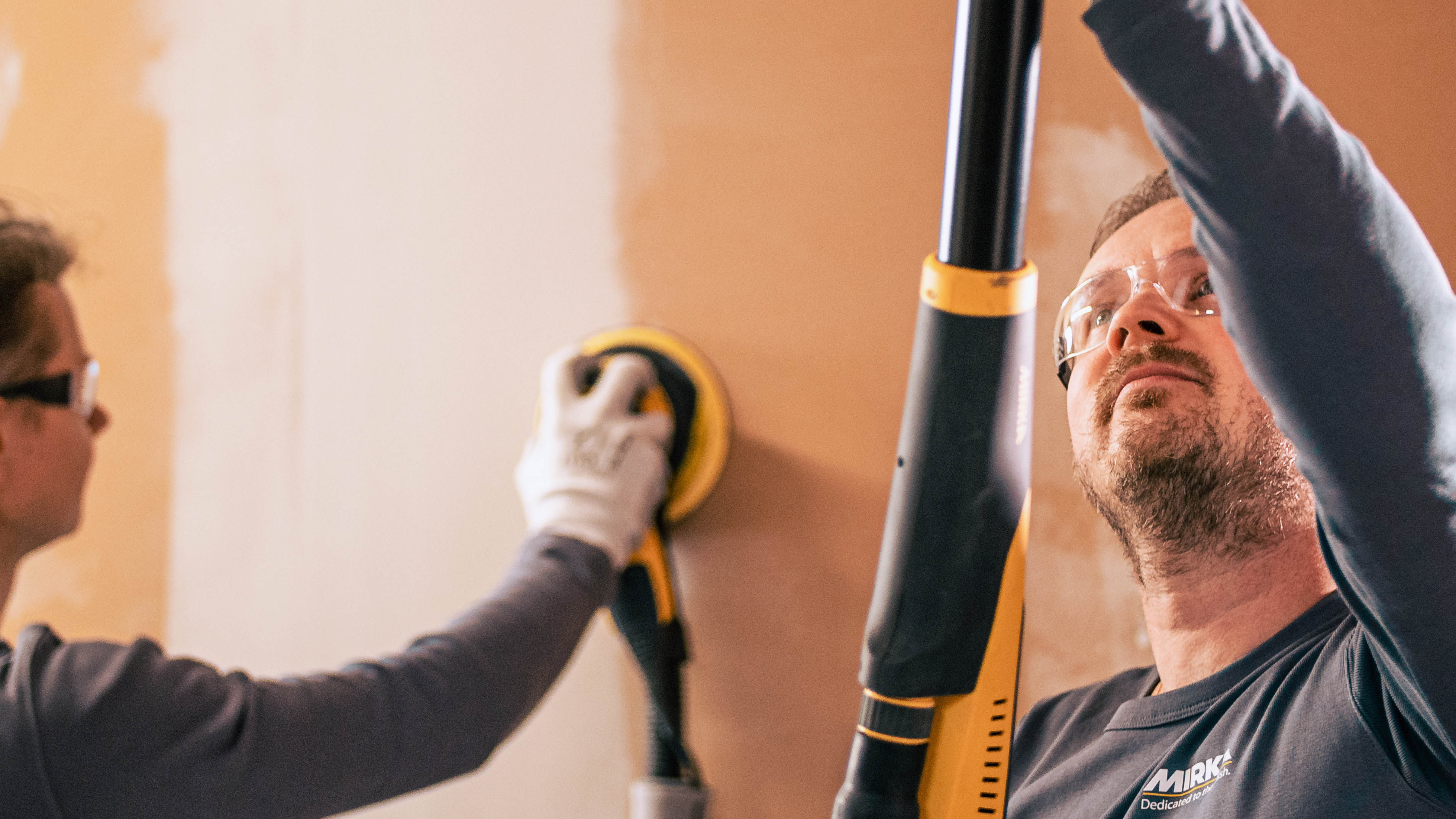
Two men sanding a wall in a construction house

Preparing a Wall for Painting or Wallpapering

The better you prepare the plastered walls before painting or wallpapering, the better the endresult. Reaching for a perfect sanding result can be time-consuming and uncomfortable, but it doesn’t have to. You don’t need to compromise the perfect sanding result if you choose the best solutions for the job at hand. 

Inhaling dust is dangerous for your health. This is why we at Mirka take removing dust seriously. We know that time is money, and with Mirka dust-free solutions you can invest your time on the actual work instead of cleaning up. 

Sanding walls after plastering can be hard on your back and shoulders. With Mirka award-winning tools you can finish your job and begin a new one with ease and comfort.


Protect Your Health with Dust-Free Sanding

When you want to protect your health and move to the next project faster, Mirka dustless drywall sanding solutions are the answer.

Read more about dust-free sanding

No Need to Compromise

Man and woman sanding wall dust-free construction

When you want perfect sanding results without compromising your health

  • A perfect finish comes from perfect preparation 
  • Drywall sanding without dust with your health as a priority 
  • Less time spent on cleaning 
  • Great ergonomics, taking care of your most valuable asset – you. 

DEROS®, LEROS® and DEOS®

Work Faster With Mirka Power Tools

For sanding partial walls, the Mirka® DEROS orbital sander is your perfect choice. For larger surfaces and ceilings, we would recommend the Mirka® LEROS 950CV drywall sander- and if you want to reach closer, LEROS-S 950CV is a shorter version of the iconic LEROS, a perfect machine for smaller rooms. 

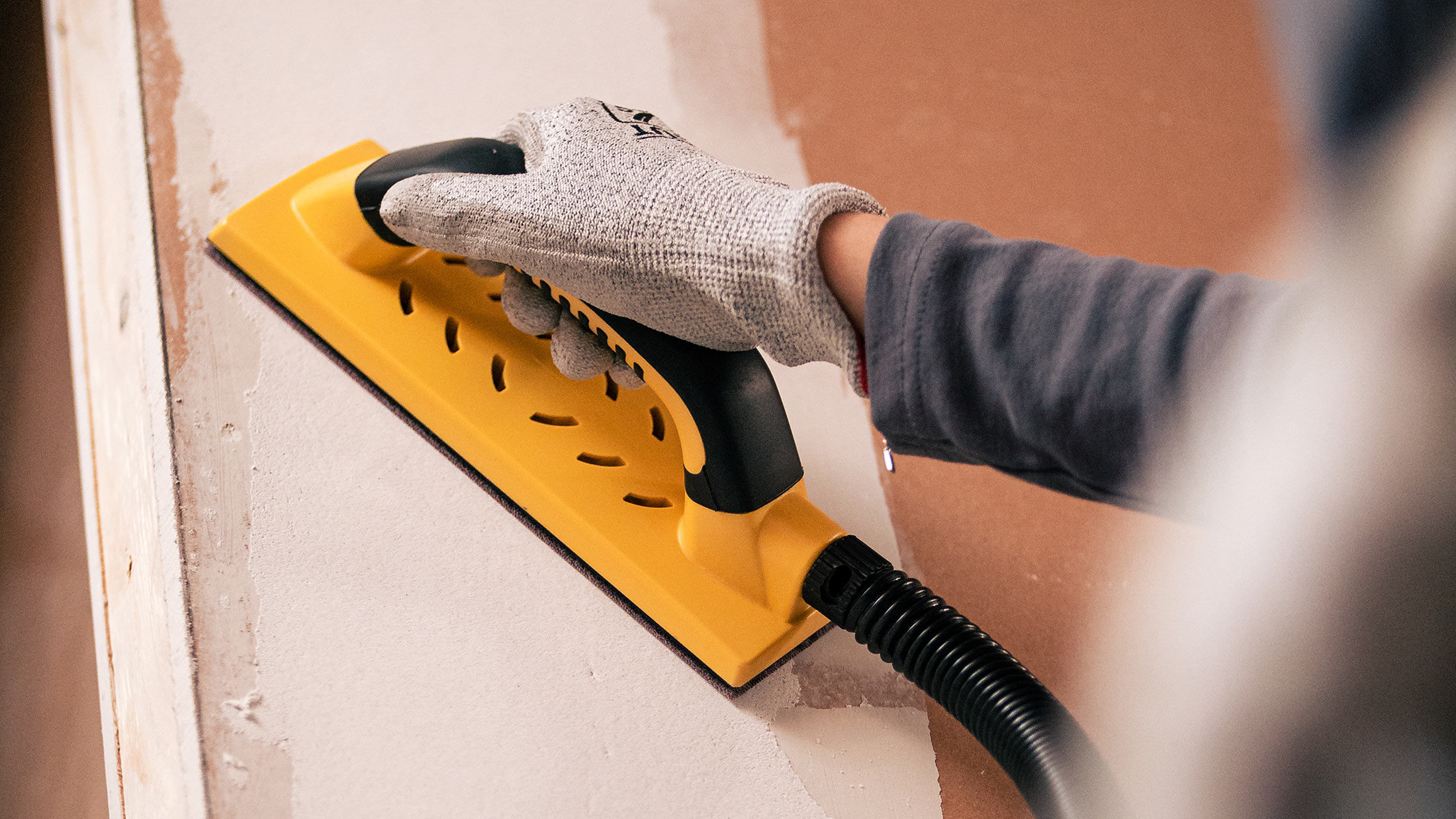
For corners and edges, Mirka® DEOS 81 × 133 as well as DEOS Delta can help you reach even the most difficult spots. In addition, Mirka® Handy hand sanding kit is a useful and ergonomic choice when there is no electricity available.

Learn more about LEROS

Abranet® Yellow

Abrasives for Dust-Free Sanding

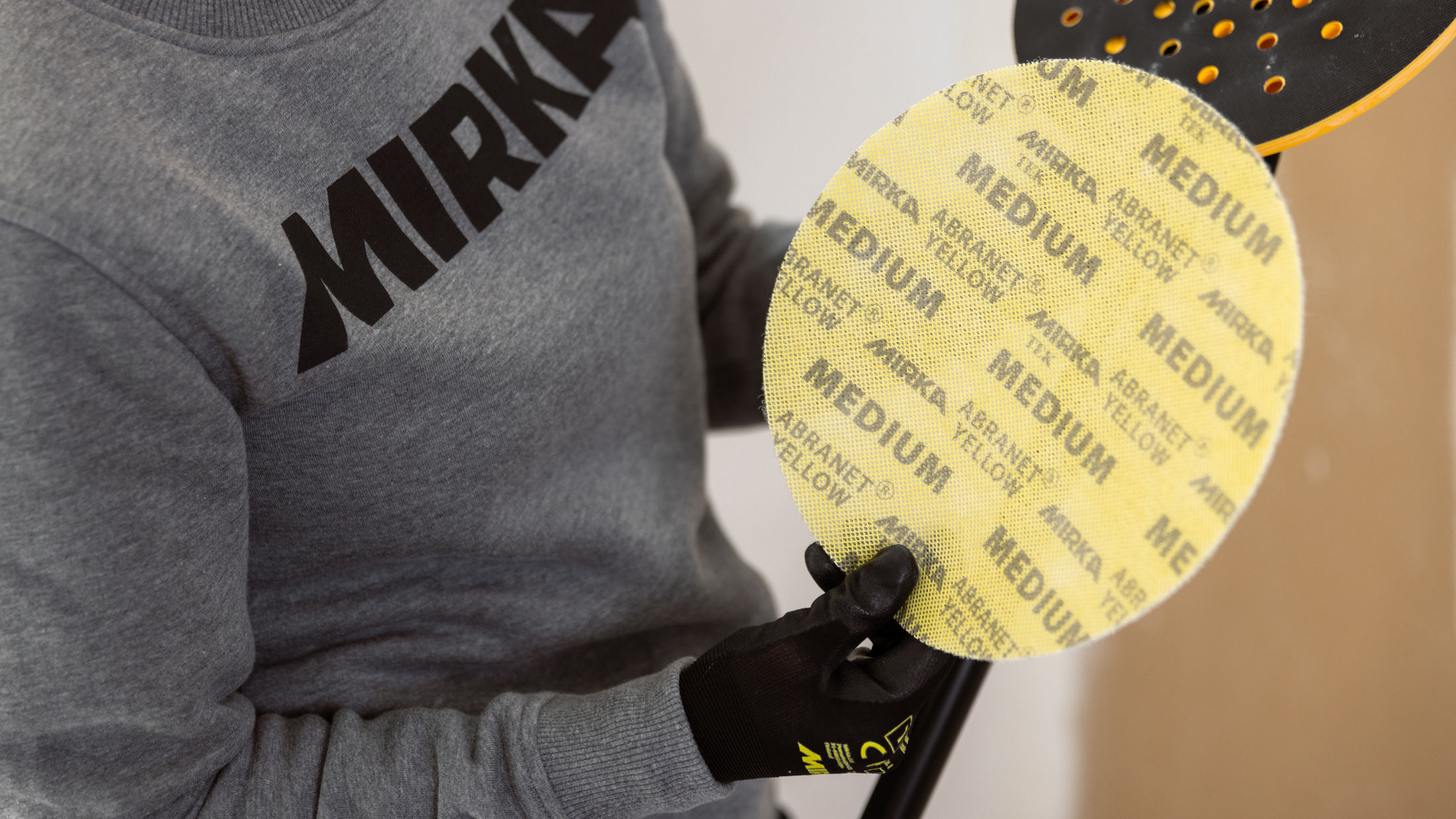
When sanding paint or putty on walls, we recommend using Abranet® Yellow. 

It is a soft, net-based abrasive made for sanding walls and ceilings. It is compatible with both rotary and random orbital wall sanders and also works well with hand sanding blocks, pole sanders, and other manual uses.

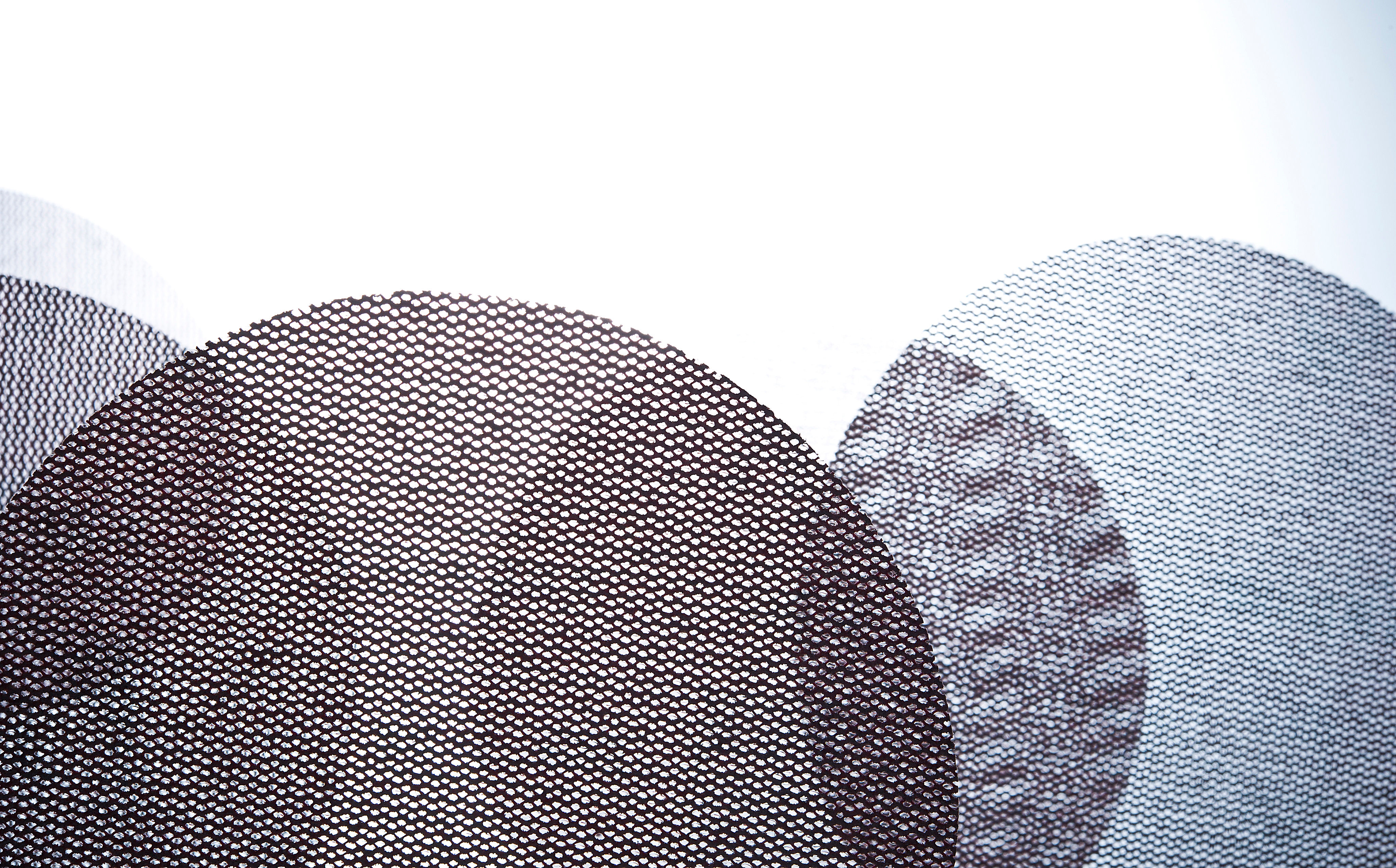
Like all Abranet abrasives, Abranet Yellow is fully formed out of mesh, offering superior dust extraction and fast, controlled material removal.  

Depending on your project, other Mirka® dust-free abrasives can also be a great fit for wall sanding. Explore the full Abranet range to find the best match for your surface and sanding needs.

Learn more about Abranet Yellow

Ornamentalist and decorative painter, France

Dust-Free Decorations in France

Having the right tools for the right sanding application is crucial if you want to exceed expectations in the finish, whether you work on something new or doing renovation work. For Alexandre Lardy, plasterer, ornamentalist and decorative painter from France, choosing a dust-free solution from Mirka was an easy choice.

'One thing I’ve really liked and that struck me immediately is the dust extraction aspect. I have the impression that I’m not sanding at all, so effective is the extraction – I get absolutely no dust.'

Alexandre Lardy, decorative painter

Paint Pot Ladies – painting and decorating business, UK

LEROS® Favoured by Painters

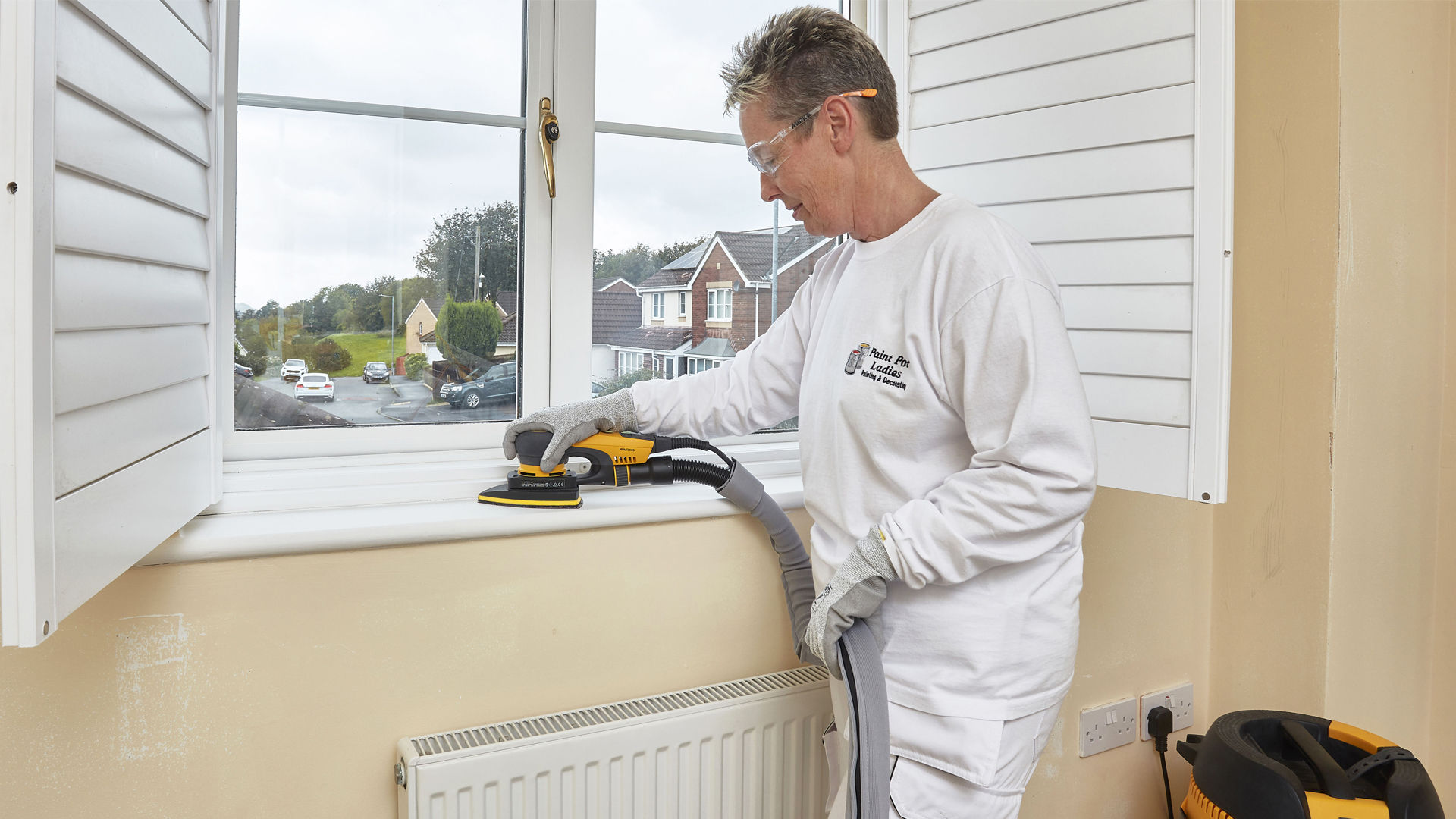
Sarah from Paint Pot Ladies was tired of ending each workday covered in dust, looking like a snowman. She decided to switch to Mirka's dust-free solutions and discovered that the complete system, which includes abrasives and practical power tools, significantly improved her work experience. The lightweight LEROS® quickly became one of her favorite tools.

'It's not only great for myself, it's also great for my customers.'

Sarah Hillberg, Paint Pot Ladies

The right solution for every project

1. Power Tools

Man sanding wall dust-free power tools

For sanding partial walls, the Mirka DEROS orbital sander is your perfect choice. For larger surfaces and ceilings, we would recommend the Mirka LEROS 950CV drywall sander- and if you want to reach closer, Mirka LEROS-S 950CV is a shorter version of the iconic LEROS, a perfect machine for smaller roomsFor corners and edges, Mirka DEOS 81x133 as well as DEOS Delta can help you reach even the most difficult spots. In addition, Mirka Handy hand sanding kit is a useful and ergonomic choice when there is no electricity available.

Learn more about our Mirka® LEROS

Net plus ultra

2. Abrasives

Changing Abranet abrasive on sanding tool

Mirka offers a wide range of effective abrasives for different applications. When sanding putty on walls, we recommend choosing the Mirka Abranet range of products. The ground-breaking Abranet abrasive is fully formed out of mesh, meaning the entire surface area can be used for dust extraction. Abranet is available in different grits and strengths. For hand sanding, Mirka Gold Proflex is a flexible and efficient sandpaper that works perfectly on paint, wood and fillers.

Read more about Mirka Abranet

Dust off

3. Dust Extraction

Woman sanding wall dust-free

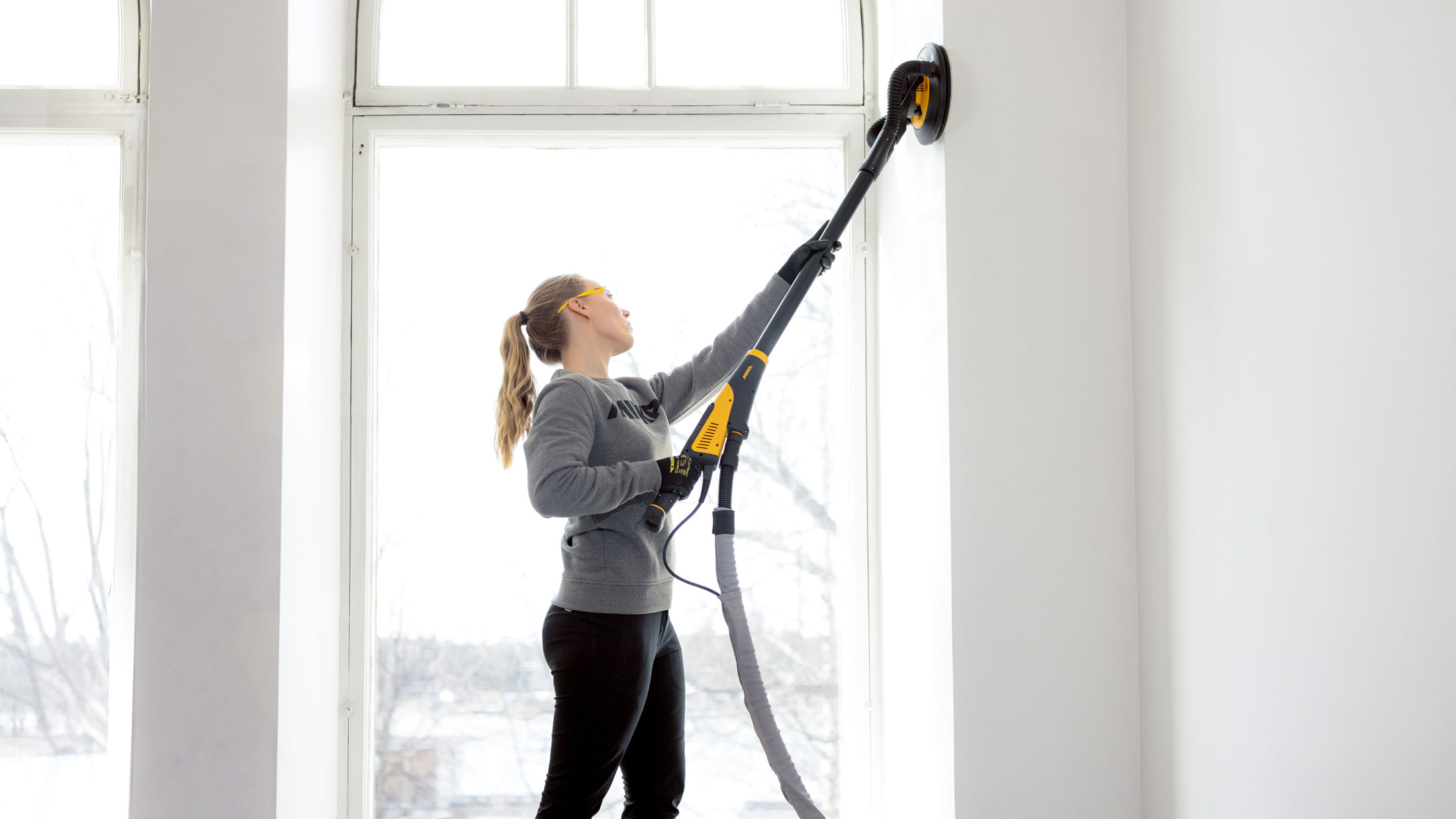
Dust removal is essential when you want to gain a perfect wall sanding result without the mess. And what about the ceiling! When using a hose to combine the efficient sanding tool with a dust extractor, the dust created from sanding can be removed by 99,7%. Dust is placed in the dust bag of the vacuum cleaner instead of remaining in the air and your surroundings. Don’t forget, we recommend using a mask and other protective gear when sanding.

Read more about Mirka dust extractors

Dust-Free Pole Sander for Smooth Wall & Ceiling Finishing

Read more about Mirka® DecoSander

The Mirka® DecoSander is designed for precision sanding of walls, ceilings, and tight corners, ensuring a flawless finish in any environment. This pole sander features interchangeable pads with grip fastening, making it versatile for diverse surfaces. The adjustable shaft extends up to 6', offering unparalleled reach for high walls and ceilings.

The stabilized sanding head ensures steady operation, preventing accidental tilting and damage to edges, while the dust-free operation system incorporates anti-static and adjustable airflow technology. This feature not only promotes a clean work environment but also enhances user efficiency.

Whether you are a professional or a DIY enthusiast, you will appreciate the DecoSander’s ergonomic design and advanced features that provide exceptional sanding performance.

Mirka® DecoSander

Take care of your health

Your Most Important Asset is You

When you want to perform better and as efficiently as possible, but don't want to inhale dust, Mirka's three-step dust-free solutions are your best friend. When the dust is directed to a dust bag, it doesn't enter your or your customer's lungs.

Mirka® Abranet Yellow

Smarter Sanding for Painters and Drywallers

Abranet® Yellow delivers a cleaner, more efficient sanding experience for professional painters and drywallers.

The well-balanced combination of softness and the fast-cutting net structure makes this abrasive ideal for sanding ceilings and walls. 

Abranet Yellow is compatible with rotary and random orbital wall sanders and performs well with hand sanding blocks, pole sanders, and other manual methods. It's available in two formats and three grit options, making it suitable for a range of tasks from heavy material removal to fine surface finishing.

View product details

Dust-Free Sanding Made Easy

Mirka® Handy Sanding Kit


The Mirka® Handy 80 x 230 mm Hand Sanding Kit includes everything you need for efficient, dust-free hand sanding. The ergonomic Handy sanding block provides excellent control and comfort, while its compatibility with dust extraction systems ensures a clean work environment, ideal for both professionals and DIY users.

The kit includes:

  • Handy hand sanding block (80 x 230 mm)
  • Dust extraction hose
  • 5 Abranet® sheets (1 x P80, 3 x P120, 1 x P180)

Save your health, time, and money

Sanding Without Dust

Do you get covered in dust when sanding? Try the benefits of Mirka's pioneering sanding solutions and see how a dust-free working environment can boost your business.

Benefits from dust-free sanding

Healthier working environment – Stop dust from getting into your lungs
Time-saving – No cleaning after sanding and clean abrasives cut better
Money-saving – No clogging lets you sand longer with the same abrasive
High-quality finish – Thanks to a finer scratch pattern 


Learn more about our dust-free sanding

Redefining innovation in surface finishing

Introducing the Next Generation of Mirka® Power Tools

The award-winning Mirka® Power Tools have entered a new era. The lineup is now even stronger with advanced technology, improved performance, and user-focused design. Meet the stars of the new generation.

Mirka® DEROS II – The enhanced orbital sander series now features 8 upgraded models, delivering more power and even smoother sanding.
Mirka® DEOS II – Our refined low-profile orbital sanders, offering superior precision and control with 4 updated models.
Mirka® DEROS RS – The all-new heavy-duty rotary sander, engineered for maximum power and precision in tough applications.
Mirka® DEXOS – A state-of-the-art M-Class dust extractor, ensuring optimal performance and dust-free work environments.


Learn more about our Next Gen tools

Stay informed and inspired with exclusive updates

Subscribe to Our Newsletter

Discover surface finishing solutions, tips, and the industry trends – for professionals like you.


7 Must-Have DIY Interior Refinishing Power Sanding Tools

Do-It-Yourself (DIY) interior refinishing projects can take a lot of time and effort, especially when the surface isn’t ready. If the old paint or finish isn’t removed properly, new coatings may peel, streak, or look uneven. That’s why the first step, sanding, matters the most.

As a DIYer aiming for professional results, you need the right power sanding tools to make the job faster, cleaner, and safer. These tools help you remove old finishes, smooth rough areas, and prepare surfaces for painting or staining. With the right equipment, even tricky spots like corners, trim, and ceilings become manageable.

This article highlights 7 power sanding tools ideal for common DIY refinishing tasks, like prepping drywall or removing paint from stairs and cabinets. Whether you're working room by room or tackling a full renovation, these tools help you achieve better results with less time and effort.

Why Surface Prep Matters in DIY Projects

Surface prep is the starting point for any refinishing job that looks clean and lasts. If you skip it, your paint won’t stick well, flaws will stay visible, and the results won’t hold up over time. As a DIYer, taking time to sand properly helps you avoid common issues and gives your work a more professional finish.

What Happens Without Proper Prep

  • Paint may crack, peel, or bubble
  • Stains and repairs show through the surface
  • Dust and debris stay trapped under coatings

Why Sanding Improves Results

  • Removes old paint, stain, or lacquer completely
  • Smooths out patched drywall seams and rough spots
  • Creates a surface that holds paint or stain evenly

Where It’s Most Important

  • Trim and woodwork: Stairs, doors, cabinets, and window frames often have old finishes that need full removal before refinishing.
  • Drywall areas: Sanding smooths drywall mud and blends repairs before painting.
  • Corners and edges: The right tools help you prep tight spaces better than hand sanding ever could.

When you put in the prep work with the right sanding tools, your final coat looks cleaner and lasts longer. You get a smoother finish and save time fixing mistakes later.

Top 7 Power Sanders for Interior Refinishing

1. Electric Random Orbital Sander

An electric random orbital sander is a go-to tool for smooth, swirl-free surface prep. It combines spinning and orbiting motions to remove material evenly and reduce visible marks.

For DIYers working on walls, doors, wood trim, or furniture, this sander saves time and improves finish quality. It works well on both flat and slightly curved surfaces.

Use it for:

  • Prepping drywall before painting
  • Smoothing stained or painted trim
  • Refinishing furniture pieces

Key benefits:

  • Even finish with minimal swirl marks
  • Low vibration for better control and comfort
  • Works with dust extraction for cleaner sanding

This tool helps you get a professional-quality surface with less effort and better consistency.

If you want a pro-level sander with great control, the Mirka® DEROS is a solid option. It runs with low vibration, supports dust-free sanding, and connects to the myMirka® app to track tool performance and safety in real time.

2. Electric Corner Sander

An electric corner sander is built for detail work. It's a square or rectangular sanding pad that fits into corners and along edges where larger sanders can't reach.

DIYers often struggle with baseboards, window frames, and stairs. This tool makes those jobs easier by sanding tight areas quickly and cleanly.

Use it for:

  • Touch-ups in corners and seams
  • Smoothing detail trim
  • Edge sanding on stairs and frames

Key benefits:

  • Compact size for precise work
  • The square-shaped pad reaches tight spots
  • Compatible with dust collection systems

Instead of hand-sanding tricky areas, this tool speeds things up while still delivering clean results.

If you want more control while sanding edges and corners, the Mirka® DEOS is worth considering. Its compact shape and low-profile design help you get clean, smooth results in hard-to-reach spots without slowing down the job.

3. Random Orbital Wall Sander

A random orbital wall sander is ideal for larger surfaces like walls and ceilings. Its head flexes to stay flat against the surface while sanding evenly with less physical strain.

For DIYers handling drywall prep, this tool makes sanding mud seams, patches, or old paint fast and consistent.

Use it for:

  • Sanding drywall compound across large areas
  • Removing old coatings from walls or ceilings
  • Prepping wide panels before repainting

Key benefits:

  • Flexible head for better contact on uneven areas
  • Even sanding with minimal streaks
  • Lightweight and easy to control on tall surfaces

Using this tool improves finish quality and reduces fatigue, especially in multi-room or ceiling-height work.

You can consider using the Mirka® LEROS wall sander. Its flexible head, lightweight body, and dust-free design make large surface sanding easier and more comfortable, even during long DIY projects.

4. Short Orbital Wall Sander

A short orbital wall sander is designed for tight or confined interior spaces. It combines orbital motion with a compact design, making it ideal for closets, small rooms, and hard-to-reach wall sections.

For DIYers prepping drywall or repainting enclosed areas, this tool helps maintain consistent results without switching to manual sanding.

Use it for:

  • Sanding small drywall sections or corners
  • Reaching areas that standard wall sanders can't
  • Refinishing closets or narrow hallways

Key benefits:

  • Flexible sanding head adapts to uneven surfaces
  • Lightweight and easy to maneuver overhead or in corners
  • Compatible with dust extraction for cleaner sanding

This tool brings professional-level surface prep to spaces where larger tools fall short.

For sanding in tighter spots with wide coverage, the Mirka® LEROS-S is a good fit. Its shorter body and flexible sanding head help you reach narrow areas while still delivering consistent results.

5. Dust Extractor

A dust extractor connects directly to sanding tools to collect fine dust as you work. It helps maintain a cleaner space and protects your health by reducing airborne particles.

DIYers sanding indoors benefit from reduced cleanup time, better visibility, and improved air quality. Using a dust extractor also helps save several hours or even days of cleanup time, especially on large or multi-room projects.

Use it for:

  • Capturing sanding dust at the source
  • Keeping work areas cleaner and safer
  • Supporting dust-free operation with sanding tools

Key benefits:

  • High suction keeps surfaces clean while sanding
  • Works continuously with automatic filter cleaning
  • Quiet and efficient for extended use

Adding a dust extractor makes sanding faster, cleaner, and safer, especially for indoor refinishing tasks.

You can also try a Mirka® Dust Extractor. It helps you keep dust under control, supports cleaner sanding, and runs steadily throughout longer tasks without slowing down.

6. Delta Sander

A delta sander is built for detail work in corners, trim, and edges. Its triangle-shaped pad fits into spaces where round sanders can’t reach.

DIYers working on baseboards, stairs, or window trim use this tool to prep areas that need precision without hand sanding.

Use it for:

  • Refinishing corners and stair edges
  • Sanding detailed wood trim or panel joints
  • Prepping small, angular surfaces

Key benefits:

  • The triangle pad fits into tight spots
  • Compact body improves control
  • Works with dust extractors for minimal mess

This tool simplifies one of the trickiest parts of surface prep: clean sanding in detailed or confined areas.

If you want more control while sanding detailed spots, the Mirka® DEOS Delta is worth a look. Its compact shape and built-in dust control make it easier to get clean, smooth results in tight corners.

7. Smart App-Enabled Power Tools

Smart app-enabled sanding tools connect via Bluetooth to track real-time performance data. DIYers can monitor vibration levels, tool usage, and service alerts for safer and more efficient work.

These tools help improve sanding habits, protect against overexposure to vibration, and keep equipment running smoothly.

Use it for:

  • Tracking how long and how hard tools are used
  • Monitoring vibration exposure to reduce fatigue
  • Getting reminders for tool maintenance

Key benefits:

  • Real-time data via app connectivity
  • Better control of usage and wear
  • Safer sanding over long projects

These smart tools combine sanding power with helpful tech features that support better project planning and safer work practices.

If you want more insight into how your tools are performing, connected options like Mirka® LEROS and DEROS combine smart app tracking with advanced sanding control. They help you work more efficiently and stay safer by monitoring vibration and usage in real time.

Safety Tips When Using Power Sanders

Power sanders help you work faster, but they need careful handling. They produce dust, vibration, and fast-moving parts. Following a few safety steps keeps your project smooth and protects your health.

Wear Protective Gear

  • Use basic protection to avoid injury and reduce exposure
  • Safety glasses to protect your eyes from dust
  • A dust mask or respirator for fine airborne particles
  • Hearing protection if using sanders for a long time
  • Work gloves to maintain grip and reduce hand strain

Keep the Work Area Clean

  • Dust and clutter can make sanding harder and less safe
  • Connect sanders to a dust extractor to keep the area clear
  • Remove loose tools or cords from the floor
  • Avoid working in tight or messy spaces

Use the Tool Correctly

  • Good results come from control, not force
  • Choose lightweight tools for better handling
  • Hold the sander firmly with both hands
  • Let the sander move across the surface without pushing

Watch Vibration and Fatigue

  • Using sanders for a long time can lead to strain
  • Take short breaks between tasks
  • Use tools designed for low vibration
  • Stop if your hands feel numb or tired

Check the Tool Before Use

  • Always inspect your equipment before starting
  • Look for cracks, loose parts, or worn cords
  • Make sure the dust connection is secure
  • Use tools that are clean and in good condition

Conclusion

As a DIYer aiming for professional results, the right sanding tools give you a real advantage. They help you prepare surfaces faster, reach tight spots, and keep your workspace cleaner. Each tool in this list supports better finish quality with less effort.

Whether you are prepping drywall, stairs, or trim, these tools help you work with more control and confidence. When surface prep is done right, your final result lasts longer and looks more refined.

Contact Us for More Information

Best Drywall Finishing Tools and Where to Buy

When it comes to drywall finishing, the tools you use decide how smooth, fast, and clean your work will be. A good sander, knife, or abrasive can save you hours, improve the quality of your finish, and make your workspace safer. Poor tools, on the other hand, can leave rough spots, create extra work, and slow you down.

Mirka’s field tests show that if you spend just a little more time sanding with the right abrasives, you can cut your overall finishing time by almost a third. That extra care in sanding means fewer touch-ups, smoother surfaces, and more time to move on to your next task. For your projects, it’s the difference between simply getting the job done and delivering a flawless finish that lasts.

In this article, you will discover the best drywall finishing tools and where to buy them, so you can work faster, achieve a cleaner finish, and get results that stand out.

Why the Right Tools Matter for Drywall Finishing

The quality of your tools directly shapes the quality of your drywall finish. A well-built sander, knife, or abrasive produces smoother surfaces, sharper lines, and more consistent results. Poor quality tools can leave uneven edges, visible marks, and create extra work in sanding or repair.

Using the right tools also improves efficiency. High-performance sanders and dust-free systems allow you to move from one stage to the next without delays. For example, a dust extractor connected to your sander keeps the work area clean so you can start priming or painting sooner.

Safety is another factor you cannot overlook. Dust from drywall contains fine particles that can be harmful if inhaled over time.

Tools designed with dust control features protect your health and create a cleaner environment for everyone on site. Ergonomic handles, low-vibration designs, and lightweight builds also reduce strain during long workdays.

When you invest in the right tools, you invest in faster turnaround, higher quality finishes, and safer working conditions for your construction or renovation projects.

Best Drywall Finishing Tools for a Professional Result

Taping Tools

Taping tools apply joint tape over seams between drywall sheets. They help you create a strong bond between panels while preparing the surface for joint compound.

In large-scale projects, using efficient taping tools can save hours compared to manual application.

Importance

  • Strengthens drywall joints to prevent cracking over time.
  • Speeds up seam preparation for faster finishing.
  • Ensures consistent tape application without wrinkles or bubbles.
  • Reduces material waste through precise tape placement.

You use taping tools to place tape directly over joints after the first layer of compound. For small projects, a manual banjo-style tool works well.

For larger renovation or new-build jobs, an automatic taper delivers compound and tape in one motion, improving speed and reducing fatigue. Always keep the tape centered over the seam and maintain steady pressure to avoid air pockets.

Finishing Knives and Trowels

Finishing knives and trowels, spread joint compound smoothly over taped seams and screw indentations. Their wide, flat blades help you feather edges, so repairs or joints blend seamlessly into the wall.

Importance

  • Creates a uniform surface ready for paint or texture.
  • Helps feather edges for invisible transitions.
  • Reduces sanding time by applying compound evenly.
  • Allows efficient coverage over large areas.

You start with a smaller knife (6–8 inches) for the first coat, applying compound directly over the tape. For the second and third coats, move to wider knives (10–12 inches) or trowels for broader coverage.

Keep your strokes long and even, applying enough pressure to smooth the compound without removing too much. In renovation work, this method ensures old and new surfaces match in finish and texture.

Mud Pans and Hawks

Mud pans hold joint compound, while hawks make it easy to carry during work. They keep the material close at hand, reducing downtime during application.

A mud pan is rectangular with sharp edges for cleaning your knife, while a hawk is a flat square board with a handle underneath.

Importance

  • Keeps compound portable for consistent workflow.
  • Allows clean loading of knives and trowels.
  • Minimizes spills and waste.
  • Improves efficiency in multi-room projects.

When working on walls or ceilings, you fill your mud pan or hawk with enough compound for the immediate area. The pan’s edges let you scrape off excess from your knife before application.

A hawk is especially useful when working overhead or moving between different surfaces, as it allows easy access from multiple angles. In a renovation setting, this means fewer trips to the mixing area and more continuous productivity.

Wall & Ceiling Drywall Sanders

Wall and ceiling drywall sanders are made for smoothing large vertical and overhead surfaces.

They help you remove joint compound ridges, level patched areas, and prepare surfaces for priming or painting. In big projects, they save time and reduce fatigue compared to manual sanding.

Importance

  • Speeds up work on large wall and ceiling areas.
  • Reduces strain during overhead sanding.
  • Creates a consistent finish over the entire surface.
  • Works with dust extraction to keep the site clean.

The Mirka® LEROS is a lightweight and ergonomic wall and ceiling sander with a 180-degree flexible head. It allows you to keep the sanding pad in contact even at difficult angles. Its random orbital movement delivers a smooth finish while reducing the risk of sanding marks.

The LEROS connects to Mirka dust extraction systems for a cleaner and safer work environment.

Features of LEROS

  • 180-degree flexible sanding head for better reach.
  • Lightweight build for long sanding sessions without strain.
  • Random orbital movement for a swirl-free surface.
  • Full compatibility with Mirka dust extractors.

For large open walls in living rooms or high ceilings in commercial spaces, the LEROS helps you work faster and maintain an even finish across the surface.

In smaller rooms, narrow corridors, or stairwells where space is limited, the Mirka® LEROS-S offers the same level of precision in a more compact size, making it easier to maneuver in tight spots without losing quality.

See how the right wall and ceiling sander can cut your sanding time, keep your job site cleaner, and give you a flawless finish on every project. Explore the full specs and results for LEROS and LEROS-S now.

Electric Random Orbital Sanders

Electric random orbital sanders are versatile tools that work on both flat and slightly curved surfaces. Their circular motion, combined with a random orbit, helps you achieve a fine finish without visible marks.

In drywall finishing, they are used for smoothing patches, blending seams, and preparing smaller areas for paint.

Importance

  • Produces a smooth, uniform finish.
  • Suitable for multiple surface types.
  • Reduces sanding time compared to manual tools.
  • Works with dust extraction systems to maintain cleanliness.

The Mirka® DEROS is a compact and powerful electric random orbital sander designed for professional use. It is lightweight and comfortable to handle, with low vibration that reduces operator fatigue.

Available in multiple pad sizes, it allows you to choose the right setup for different job types. The DEROS is also compatible with Mirka dust extraction systems for a healthier workspace.

Features of DEROS

  • Brushless motor for consistent power.
  • Low vibration for improved comfort during long tasks.
  • Multiple pad sizes to match specific needs.
  • Bluetooth connectivity for vibration monitoring through the myMirka® app.

In your renovation work, the DEROS is ideal for blending repaired drywall areas in bedrooms, smoothing joint compound in kitchens, or preparing accent walls for painting.

Its compact size makes it easy to handle in spaces where a wall sander would be too large, such as around windows or built-in shelving.

Experience the difference a professional-grade random orbital sander can make in your next drywall job. Check the DEROS range and choose the setup that will deliver faster and cleaner results.

Compact Electric Hand Sanders

Compact electric hand sanders are designed for detailed sanding in corners, edges, and tight spaces. They allow you to work with control and accuracy in areas where larger sanders cannot reach.

Importance

  • Provides precision in small or confined areas.
  • Easy to maneuver for detailed finishing.
  • Ensures high-quality results in corner work.
  • Works well with dust extraction to maintain clean conditions.

The Mirka® DEOS and DEOS Delta are compact sanders with a low-profile design. They give you better visibility of the work area and allow access to edges and tight corners.

These sanders deliver strong performance while keeping weight low, making them easy to use over long periods. They also integrate with Mirka’s dust-free sanding systems to improve site cleanliness.

Features of DEOS and DEOS Delta

  • Low-profile body for improved visibility.
  • Lightweight for better handling.
  • Powerful motor for fast material removal.
  • Works with Mirka dust extraction systems.

In a renovation project, you can use the DEOS to finish drywall corners in hallways, smooth edges near door frames, or prepare small wall sections around cabinetry.

The DEOS Delta is especially useful for reaching into angled areas and sanding around electrical outlets or moldings where precision matters most.

Upgrade how you handle corners, edges, and tight spaces. See how DEOS and DEOS Delta give you the precision and dust-free finish your projects demand.

Where to Buy Drywall Finishing Tools

Local Hardware and Construction Supply Stores

Local hardware and construction supply stores let you see and handle tools before buying. You can check the build quality, feel the weight, and get immediate feedback from staff who know the basics of construction.

Benefits:

  • Immediate access to tools without shipping delays.
  • Ability to inspect products before purchase.
  • Local staff with regional construction knowledge.
  • Convenient returns or exchanges.

Drawbacks:

  • Limited selection of specialized or high-performance tools.
  • Higher prices compared to direct or bulk purchasing.
  • Staff may not have detailed knowledge of professional-grade products.
  • Risk of counterfeit or low-quality imports in some locations.

Online Marketplaces

Online marketplaces give you a wide range of tools at your fingertips. You can compare features, prices, and customer reviews from anywhere.

Benefits:

  • 24/7 access from any location.
  • Easy product and price comparisons.
  • Customer reviews for real-world feedback.
  • Potential for discounts and bundled offers.

Drawbacks:

  • Risk of counterfeit or used products being sold as new.
  • Inconsistent product descriptions and technical details.
  • Limited or no manufacturer warranty support.
  • Delays in shipping or stock availability.

Specialized Professional Tool Retailers

Specialized retailers focus on supplying professional-grade equipment and may offer a deeper selection of premium brands. They also provide better technical advice compared to general hardware stores.

Benefits:

  • Access to high-quality, professional tools.
  • Knowledgeable staff who understand industry needs.
  • Stock of specialized or niche equipment.
  • May offer repair or servicing options.

Drawbacks:

  • Often more expensive than buying directly from the manufacturer.
  • Limited to certain locations or regions.
  • Product availability may vary depending on supplier relationships.

Official Brand Website

Buying directly from a brand’s official website ensures you get genuine products backed by full manufacturer support. The Mirka website is built to make tool selection and research simple.

Every product listing provides detailed technical specifications, downloadable guides, and related product recommendations to help you build a complete solution for your workflow.

Mirka’s customer service section offers direct access to technical support, troubleshooting help, and warranty information. Through the contact page, you can speak directly with product specialists who understand construction and renovation needs.

Key advantages of the Mirka website:

  • Guaranteed authentic products with full warranty.
  • Complete technical details for every tool.
  • Downloadable resources for correct usage and setup.
  • Related product suggestions for a complete solution.
  • Direct, professional customer support.

If you want tools that meet professional standards, come with reliable after-sales service, and are supported by a global leader in surface finishing, the Mirka website is the most direct and dependable option for your construction and renovation projects.

Top Brands for Drywall Finishing Tools

In the drywall finishing market, a few brands consistently earn the trust of professionals. Names like DeWalt, Stanley, and Mirka are recognized for producing tools that meet the demands of serious construction and renovation work.

Each has its place, but when it comes to a complete and reliable system that combines abrasives, sanding tools, dust-free technology, and long-term support, Mirka is the brand that stands out.

Mirka has built its position as a world leader in surface finishing technology through decades of innovation and direct work with industry professionals. This experience is not only about manufacturing tools.

It is about understanding the real challenges you face on the job site and designing solutions that make your work easier and more effective.

Our vision is to lead the industry with innovation while staying responsible and sustainable. For you, this means using tools that help you finish walls and ceilings faster, control dust, and maintain quality across every project.

Whether you are preparing a large commercial space or completing a small home renovation, Mirka tools are designed to make your work more efficient and consistent.

Our mission is to give you the opportunity to perform better. That opportunity is built into every product. When you use a Mirka sander or Abranet® abrasives, you are working with equipment created to reduce your finishing time, lower cleanup effort, and improve the quality of your surfaces. These results directly support smoother workflows and higher client satisfaction.

Our values are responsibility, commitment, innovation, and respect.

  • Responsibility means tools and systems that protect your health by reducing dust exposure.
  • Commitment means dependable performance every day.
  • Innovation means new designs that reduce fatigue and improve precision.
  • Respect means creating products that work the way you work without forcing you to change your process.

Mirka offers more than individual products. It provides complete systems. The LEROS is ideal for large wall and ceiling areas. The DEROS and DEOS handle detailed sections and compact spaces.

Dust extractors and purpose-built accessories complete the setup so that sanding, finishing, and site cleanliness are all addressed in one system.

Choose a brand that understands the demands of your trade and delivers tools that improve every stage of drywall finishing. Choose Mirka and give your projects the speed, precision, and clean results they deserve.

Conclusion

Choosing the best drywall finishing tools can transform the quality, speed, and safety of your projects. From taping and finishing to sanding and dust control, each tool plays a vital role in delivering professional results.

Mirka offers complete solutions that combine advanced technology, durability, and user comfort, helping you work smarter and finish stronger.

Contact Mirka today to get expert guidance, explore tailored solutions, and equip your next drywall project with the tools that set industry standards.

How to Smooth Textured Walls: Step-by-Step Guide

Textured walls were once popular, but many property owners now see them as dated and difficult to maintain. Heavy textures trap dust, make cleaning harder, and limit the type of finishes you can apply. When planning a modern interior or updating an older space, these walls often become an obstacle to achieving a clean, smooth look.

By following a clear step-by-step approach, you can transform rough-textured walls into a smooth, fresh surface that is easier to paint, decorate, and maintain.

In this article, you will learn why smoothing textured walls is important, the step-by-step process to achieve a flat finish, and the tools that make the work easier and cleaner.

Importance of Smoothing Textured Walls

Smoothing textured walls improves both appearance and functionality. Walls with heavy textures often look outdated and may interfere with modern interior finishes. A smooth surface creates a cleaner and more versatile base for any wall treatment.

Key reasons why smoothing textured walls is important:

  • Improved Aesthetic Appeal: Smooth walls give a modern and professional look. They allow paint colors, wallpaper, or decorative finishes to appear uniform without shadows created by raised textures.
  • Easier Cleaning and Maintenance: Textured walls trap dust and dirt in grooves, making cleaning difficult. A smooth wall surface is easier to wipe down and maintain, which is valuable in high-traffic areas.
  • Better Surface for Finishing Products: Smooth walls create a consistent base for paints and coatings. This reduces paint consumption and prevents uneven coverage or roller marks common on textured surfaces.
  • Increased Property Value: Updated smooth walls make interiors look new and well-maintained, which can improve property value and buyer appeal during renovations or resale.
  • Simplified Wall Repairs: Future wall repairs and touch-ups are easier on smooth walls. Filling holes or cracks blends seamlessly compared to textured surfaces, where patterns are difficult to match.

Smoothing textured walls adds value both visually and practically. It creates a foundation for durable, clean, and attractive finishes that meet modern design standards.

Step-by-Step Guide for Smoothing Textured Walls

Step 1: Prepare the Room and Wall Surface

A well-prepared work area prevents dust contamination, protects surfaces, and ensures faster cleanup. If skipped, you risk damaging furniture and floors, and dust can settle on freshly applied compound.

Clear the space by moving furniture out of the room or covering it tightly with plastic sheeting. Seal off vents and doorways with plastic and painter’s tape to stop dust from spreading to other areas of the building.

Before applying any compound, check the wall for loose paint, nails, or existing cracks. Fill any gaps or holes with a patching compound and allow it to dry. A clean and stable wall surface ensures proper adhesion and reduces rework.

How to do it professionally:

  • Cover the floor with drop cloths and secure edges to prevent tripping.
  • Tape around trim, outlets, and switches for clean edges.
  • Wipe down the wall with a damp cloth to remove dust and grease.
  • Wear safety glasses and a dust mask during all preparation steps.

Step 2: Apply a Skim Coat to Cover the Texture

A skim coat levels out ridges and patterns that cannot be removed by sanding alone. Without this layer, deep textures will remain visible even after painting, especially in bright light.

Mix the joint compound to a smooth, lump-free consistency. Use a wide drywall knife or trowel and work in thin, even layers. The goal is not to add thickness but to create a flat base over the existing texture.

Start from one corner and work across the wall in horizontal passes. Keep a slight angle on the knife to control compound flow and avoid leaving deep edge lines.

Allow the compound to dry fully before moving to the next stage, which typically takes 12–24 hours depending on temperature and humidity.

How to do it professionally:

  • Apply compound in small sections to maintain control.
  • Keep the knife clean to prevent dried compound chunks from scratching the surface.
  • Check coverage with a work light at an angle for hidden texture patterns.
  • Smooth ridges immediately before they harden, reducing sanding effort later.

Step 3: Sand the Wall for a Smooth Finish

Sanding smooths out ridges, knife marks, and imperfections left from the skim coat. Skipping or rushing this step can leave bumps and uneven areas that will show through the final paint.

Start sanding with P120 to P150 grit to quickly level high spots and ridges without gouging the surface. After the wall is even, switch to P180 grit for a fine finish that is ready for priming. This grit progression ensures the wall is flat and smooth without scratching the surface.

For large walls or ceilings, use a drywall sander to maintain consistent pressure and speed up work. Check your progress with angled lighting to catch any missed areas or surface shadows.

How to do it professionally:

  • Move the sander in overlapping patterns to cover all areas evenly.
  • Keep the sanding head flat to avoid digging into corners or edges.
  • Use a work light to spot imperfections as you go.
  • Remove all dust with a vacuum or a damp cloth before applying primer or additional coats.

Step 4: Apply a Second Coat if Needed

A second skim coat helps cover any remaining texture or imperfections missed during the first coat. Without it, subtle patterns and low spots may still show through after finishing.

Apply this coat in a perpendicular direction to the first one for better coverage. This cross-pattern application fills gaps left behind in the initial coat and creates a more uniform surface.

Feather the edges smoothly into adjoining areas to prevent ridges and lines. Let the coat dry fully and check for imperfections before proceeding to the final sanding stage.

How to do it professionally:

  • Focus on seams and depressions where texture is hardest to hide.
  • Maintain thin, even strokes to avoid creating high spots.
  • Use light pressure to reduce trowel marks and improve smoothness.
  • Inspect the wall after drying with an angled light to spot uneven areas early.

Step 5: Final Sanding, Priming, and Painting

The final sanding and priming step prepares the wall for a lasting, professional finish. Skipping it can result in visible blemishes and poor paint adhesion.

Lightly sand the second coat to remove knife edges and small bumps. Keep the sanding even and avoid pressing too hard to prevent grooves.

Once the wall is smooth, apply a drywall primer to seal the surface. Primer prevents uneven paint absorption and reduces the number of paint coats needed. After priming, finish with a topcoat using even roller strokes for consistent coverage.

How to do it professionally:

  • Use fine-grit sanding for a uniform surface.
  • Clean all dust before applying primer to ensure proper bonding.
  • Allow primer to dry completely before applying paint.
  • Use angled lighting to confirm the wall is defect-free before the final coat.

Mirka Tools for Smoothing Textured Walls

Mirka® LEROS for Sanding Large Wall and Ceiling Areas

The Mirka® LEROS is a professional-grade wall and ceiling sander designed to handle large areas quickly and with precision.

When smoothing textured walls, its lightweight build and flexible sanding head reduce strain and help you achieve a flat, even finish without awkward working positions.

The sanding head moves with 180 degrees of flexibility and has a 5 mm random orbital movement. This design follows wall contours and reaches closer to edges, helping you remove old textures and level skim coats without leaving swirl marks.

At just 7.7 lbs., the LEROS reduces operator fatigue during long sanding sessions, making it ideal when working on entire rooms or high walls where manual sanding would be time-consuming and physically demanding.

Pairing the LEROS with Mirka’s dust-free system keeps the work area clean and reduces airborne particles. This means you can see exactly what you are sanding, avoid oversanding, and spend less time on cleanup after finishing.

For smaller or confined spaces, the compact LEROS-S model offers the same technology in a shorter design for close-range work.

If you are tackling large textured wall areas and want a faster, cleaner, and more ergonomic way to get professional results, consider using the Mirka® LEROS for your next project.

Mirka® DEROS for Detail and Edge Sanding

The Mirka® DEROS is a compact, ergonomic random orbital sander designed for control and precision. When smoothing textured walls, it is particularly useful along edges, corners, and detailed areas where larger wall sanders cannot reach.

Its small size and powerful, brushless motor make it a reliable choice for creating a consistent finish from one edge of the wall to the other.

The DEROS features multiple pad sizes and orbits, allowing you to work comfortably in tight spots and detailed sections. Its low-vibration design reduces strain during extended use, which is important when sanding edges or intricate wall sections for long periods.

Integrated vibration sensing and Bluetooth® connectivity also help monitor safe tool handling through the myMirka® app, making it a smart option for professionals focused on health and safety.

When connected to a dust-free extraction system, the DEROS minimizes airborne dust, keeping the workspace clean and helping you see the surface clearly as you work. This visibility is key to avoiding oversanding and ensures every edge and detail matches the smoothness of the main wall surface.

For detail and edge sanding during textured wall smoothing projects, the Mirka® DEROS is recommended for its precision, ease of use, and ability to deliver a high-quality, dust-free finish.

Mirka® DEOS for Corners and Tight Spaces

The Mirka® DEOS is a compact electric hand sander designed to reach areas that are often difficult to smooth with larger wall sanders. When working on textured walls, corners, edges, window frames, and tight sections can be challenging.

The DEOS solves this problem with its low-profile design and precise handling, allowing you to remove texture and smooth every surface evenly.

The DEOS is less than 2 pounds and only 4 inches high, which means you can maneuver it easily into confined spaces without straining your hands or arms. Its Delta-shaped model is especially useful for inside corners and along trim lines, where maintaining control is critical to avoid damaging adjacent surfaces.

The tool’s brushless motor and 3 mm orbit provide strong sanding power while maintaining a consistent, smooth finish, which is important when preparing these detailed areas for painting.

The sander is also designed for comfort and safety. Its low vibration level (8.53 ft/s²) reduces fatigue during extended use, and the integrated Bluetooth® vibration sensor connects with the myMirka® app to monitor safe tool handling.

When paired with Mirka’s dust-free extraction system, the DEOS keeps even tight work areas clean and visible, reducing cleanup time and helping you deliver a high-quality result.

For detailed sanding in corners and tight spaces, the Mirka® DEOS gives you the control, precision, and ergonomic comfort needed to achieve a professional-grade finish on textured wall projects.

Abranet® Sanding Discs for Dust-Free Sanding

Abranet® sanding discs are Mirka’s original net abrasives designed to remove dust at the source while maintaining a consistent cut.

When smoothing textured walls, dust control is essential because airborne particles can settle back on freshly sanded surfaces, affect visibility while working, and increase cleanup time.

Abranet® discs work with wall sanders like the Mirka® LEROS and detail sanders like the Mirka® DEROS and DEOS, creating a cleaner, safer, and more efficient sanding process.

The discs feature a mesh construction with thousands of tiny holes that allow dust to flow directly into the connected extraction system. This prevents clogging, keeps the abrasive surface cutting evenly, and produces a uniform scratch pattern.

For textured wall smoothing, this means faster sanding, fewer abrasive changes, and a reduced risk of surface imperfections caused by embedded dust particles.

Using Abranet® discs also improves the quality of the final finish. Because the surface remains clean while sanding, you can see your progress clearly and avoid oversanding high spots or missing low areas. This is particularly important on skim-coated walls, where achieving a consistent flat surface is key before priming and painting.

If you want a dust-free solution that speeds up work, improves sanding precision, and reduces cleanup, consider using Abranet® sanding discs as part of your textured wall smoothing system.

Mirka® Dust Extractors for a Clean Workspace

Mirka® dust extractors are built to work with sanding tools and net abrasives to capture dust directly at the source. When smoothing textured walls, they are especially valuable because sanding joint compound and old wall coatings creates fine dust that easily spreads throughout the work area.

A dust extractor keeps the surface visible during sanding, prevents dust from settling back on finished areas, and reduces cleanup time after the job.

The extractors integrate seamlessly with Mirka® LEROS, DEROS, DEOS, and Abranet® sanding discs. By pulling dust away through the entire abrasive surface, they reduce clogging and help maintain a consistent sanding cut.

This means you can work faster, change abrasives less often, and achieve a smooth, professional-grade finish with fewer passes.

A clean work environment also protects workers and building occupants from prolonged dust exposure. Fine particles from drywall compound and old paint can be harmful if inhaled. Using a dust extractor lowers airborne dust levels, improving workplace safety and meeting professional sanding standards.

For a cleaner, safer, and more efficient workflow when smoothing textured walls, add a Mirka® dust extractor to your sanding setup.

Conclusion

Smoothing textured walls transforms outdated surfaces into clean, modern finishes ready for paint or wallpaper. A structured approach that includes preparation, skim coating, sanding, and proper finishing ensures consistent results and long-lasting quality.

These steps reduce future maintenance, improve aesthetics, and create a professional foundation for any interior design. By investing time and effort into this process, you achieve smooth walls that enhance both property value and visual appeal, while making future repairs and updates easier.